
The Most Frequently Replaced Garage Door Parts and Why They Fail
A garage door system has more moving parts than most homeowners realize. The panel you see from the street is the least likely thing to need attention. What fails, and fails predictably, is the hardware behind it: the springs that do the lifting, the cables that guide it, the rollers that carry it along the track, and the sensors that keep it safe.
Understanding which parts fail most often and why helps you recognize what is happening when something sounds or looks wrong. It also helps you have a more informed conversation when garage door technicians are on-site and walking you through what they found.
Torsion Springs
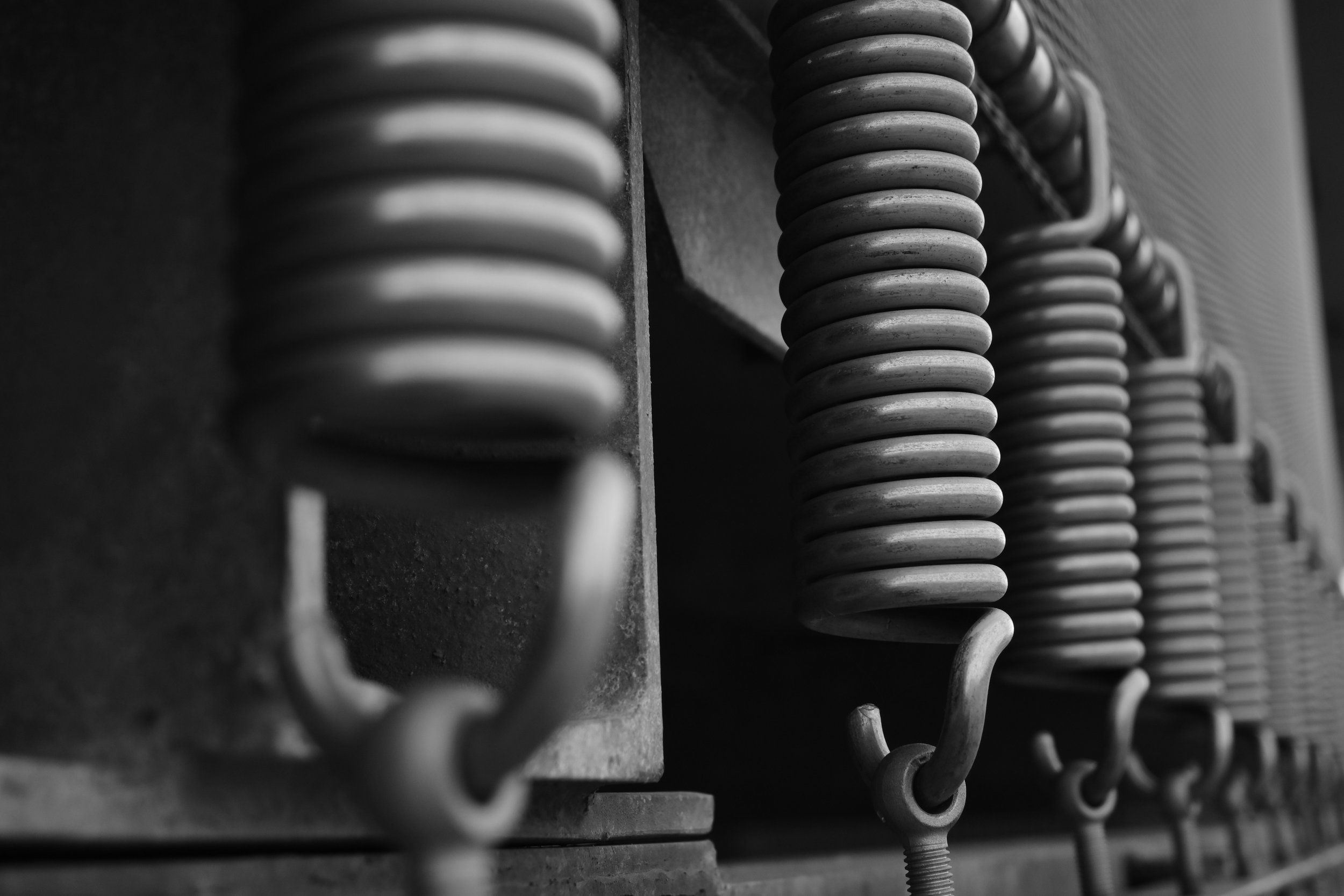
Springs are the single most frequently replaced component in any residential garage door system. The torsion spring is mounted horizontally above the door opening and stores mechanical energy as the door closes. When the door opens, that stored tension releases and does most of the actual lifting work. The opener guides the movement. The spring carries the weight.
Why they fail: Standard torsion springs are rated for roughly 10,000 cycles. One cycle equals one complete open and close. At two uses per day, that works out to about 13 to 14 years. Households that run the door four or more times daily may see spring failure in five to seven years. Springs do not gradually weaken in a way that is easy to detect. They typically snap suddenly, often with a loud bang from the garage.
What failure looks like: The door will not open, or the opener runs, but the door only rises a few inches before the motor's auto-reverse stops it. You may see a visible gap in the spring where it has snapped in the middle.
What replacement involves: A technician identifies the correct spring specification for the door's weight and height, safely removes the broken spring under controlled tension release, and installs the replacement with proper calibration. We recommend replacing both springs when they were installed at the same time. They share the same lifecycle, and the second spring is typically near failure when the first one goes.
Cables
Cables work alongside the springs to lift and lower the door. They run from the bottom brackets on either side of the door, up through pulleys and drums near the ceiling, and connect to the spring system. When a cable snaps or frays, the door loses balanced support on that side and drops or hangs unevenly.
Why they fail: Cables fatigue over time from repeated tension and release. Fraying often begins where the cable wraps around the drum or pulley, which are points of high stress. Corrosion accelerates wear in humid or coastal environments. A cable on a door with a failing or broken spring is also at higher risk, since the load distribution shifts abnormally.
What failure looks like: The door drops on one side, hangs at an angle, or will not move at all. A visibly frayed cable is a warning that snapping is imminent, and it should not be left to fail completely.
What replacement involves: Our technicians carry cables on every truck. Replacement is completed on the same visit in most cases. The technician also checks the drums, pulleys, and spring tension while the cable side is already accessible.
Rollers
Rollers are the small wheels that run along the vertical and horizontal tracks and carry the door's weight as it travels. Most residential doors have 10 to 12 rollers. They are easy to overlook until they start causing problems.
Why they fail: Rollers wear out from friction and lack of lubrication. Nylon-coated rollers are quieter but eventually crack. Steel rollers are more durable but louder, and they can develop flat spots from long periods of disuse or from running under abnormal door stress. Rollers running in a misaligned track wear out faster because they are grinding against the track edge rather than rolling cleanly through it.
What failure looks like: Grinding or squealing during door operation is the most common sign. A door that shakes or vibrates more than usual, or one that seems to drag through part of its travel, often has worn rollers. In some cases, a roller can seize entirely and mark the track.
What replacement involves: Roller replacement is relatively fast and resolves most noise complaints without any other repair. Our technicians carry replacement rollers for most door configurations. We recommend commercial-grade steel rollers with nylon coating for a combination of durability and quieter operation.
Safety Sensors
Safety sensors sit on either side of the garage door opening, a few inches off the floor, and project an invisible beam across the door path. If anything breaks that beam while the door is closing, the door reverses automatically. It is a straightforward safety mechanism and one of the more frequently serviced components on any system.
Why they fail: Misalignment is the most common issue. Sensors can be bumped out of position by a broom, a garbage can, or a car pulling in too close. Dirt and spider webs on the sensor lens can also interrupt the beam. Actual sensor failure, where the unit itself stops working, is less common but does happen, particularly on older systems.
What failure looks like: The door closes partway and then reverses without any visible obstruction. The indicator lights on the sensors will usually show a blinking pattern rather than a steady glow when they are misaligned or blocked.
What replacement involves: If realignment resolves it, the repair is fast and simple. If the sensor unit has failed, our technicians carry replacement sensors for most opener brands and can complete the swap on the same visit.
Hinges
Hinges connect the door sections to each other and allow the door to flex as it travels from vertical to horizontal through the curved section of the track. They are subject to repetitive stress on every cycle and are subject to corrosion in damp environments.
Why they fail: Hinge holes become elongated over time as the bolt connection loosens from vibration. Hinges that have been running without lubrication corrode at the pivot point and eventually crack. Physical impact on a door section can also bend a hinge beyond its usable range.
What failure looks like: A door section that visibly flexes or wobbles at the connection point, squeaking that does not resolve with lubrication, or a hinge that is visibly cracked or bent. A badly worn hinge puts stress on adjacent sections and can lead to panel misalignment.
What replacement involves: Hinge replacement is straightforward and typically done alongside other hardware work when the technician is already servicing the door. We use commercial-grade oversized steel hinges on all hardware replacements.
Weather Seals
The bottom seal runs across the base of the door and compresses against the floor when the door closes. Vinyl trim seals run along the top and sides of the door frame. Both degrade from UV exposure, temperature cycling, and the mechanical stress of the door pressing against them repeatedly.
Why they fail: Rubber and vinyl seals crack and harden over time, losing their flexibility and their ability to compress evenly. A door that runs against concrete without a functional bottom seal will wear the seal faster. In cold climates, seals can freeze to the floor and tear when the door opens.
What failure looks like: Light or air is coming through the door perimeter when the door is closed. Water is pooling inside the door threshold during rain. Visible cracking or crumbling along the seal edge.
What replacement involves: Seal replacement is one of the fastest repairs and is often combined with a tune-up visit. Our technicians carry replacement seals for standard door widths.
Garage Door Openers
Openers are electromechanical units with motors, drive mechanisms, circuit boards, and wireless receivers. They are also one of the most commonly serviced components once a door system ages past the 10-year mark.
Why they fail: Most openers last 10 to 15 years with regular maintenance. Motor wear, circuit board failure, and degraded wireless receivers are the most common failure modes. Openers that have spent years working against an out-of-balance door fail sooner.
What failure looks like: The opener runs, but the door does not move; the remote stops responding entirely, or the unit makes noise without engaging the drive. Intermittent operation (works sometimes, not others) often points to a logic board or receiver issue.
What replacement involves: We carry LiftMaster Professional openers as our primary line, along with parts for Chamberlain, Craftsman, and Genie units. For a failing opener on an otherwise sound door, opener replacement is usually the cleanest path forward. A new unit includes updated safety features, smart home compatibility, and a fresh warranty.
Related Topics: